Glitch Is the New Gorgeous: Why Creators Are Letting the Mess Show
There's a moment most of us have felt scrolling through our feeds — a kind of visual numbness that sets in somewhere between the fifteenth gradient logo and the twentieth hyper-retouched portrait. Everything looks correct. Nothing looks real. And somewhere in that gap, a countermovement quietly took root.
Across music, visual art, motion design, and even brand identity work, a growing number of creators are making a deliberate choice to leave the rough edges in. Not because they ran out of time. Not because they couldn't do better. But because "better" stopped meaning what it used to.
The Algorithm Made Us Allergic to Authenticity
For the better part of the last decade, the creative internet has been shaped — consciously or not — by what performs well. Smooth transitions. Clean typography. Faces with pores that don't exist. The feedback loop between platform optimization and human attention trained an entire generation of creators to equate quality with frictionlessness.
But audiences aren't stupid. Over time, that frictionlessness started to feel like a wall. You could admire the craft, but you couldn't touch it. And touch — that sense of human presence embedded in a piece of work — is what people are starving for right now.
Experimental musicians started noticing this first. Artists working in genres like lo-fi hip hop, noise, and bedroom pop had already built careers on the aesthetic of "recorded in a bathroom at 2am." But more recently, producers who could afford pristine studio time started choosing not to use it. The tape hiss isn't an accident. The clipping isn't a mistake. It's a signature.
Imperfection as Artistic Argument
Digital painters and illustrators are doing something similar, and the visual results are striking. Where once the goal was to make a digital canvas indistinguishable from oil on linen, a new school of artists is making sure you know it was made by a human in real time — with visible undo marks, color inconsistencies, and brush strokes that don't resolve cleanly.
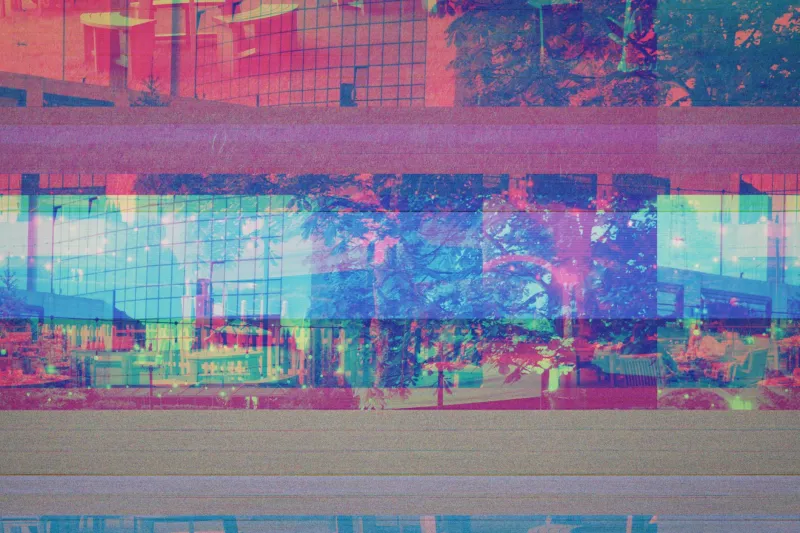
Creators working in motion graphics have started deliberately introducing glitch artifacts: the kind of corrupted-file visual noise that would have been a nightmare to a designer five years ago. Now those same artifacts appear in gallery shows, brand campaigns, and experimental short films as intentional aesthetic choices. The glitch becomes a timestamp, a proof of presence.
What's happening here isn't nostalgia, exactly. It's closer to a philosophical statement. When you let the imperfection stay, you're saying: a person made this, and that person had limits, and those limits are part of the work.
Audience Fatigue Is Real, and Creators Know It
The response from audiences has been telling. Content that feels handmade — even when it's technically digital — consistently generates more meaningful engagement than its polished counterparts. Not always more clicks, but more comments, more saves, more of the slower, stickier interaction that actually builds a creative community.
Creators who've leaned into this aesthetic talk about a shift in the kind of feedback they receive. Less "this is so clean" and more "this feels like something I've felt." That distinction matters enormously to anyone trying to build a lasting creative practice rather than just a content pipeline.
There's also something quietly political about the choice. In an era where AI-generated imagery is flooding every corner of the visual internet — often indistinguishable from human work at a glance — intentional imperfection functions as a kind of proof of humanity. The smudge, the off-register color, the note that doesn't quite resolve: these are things an algorithm optimizes away. Leaving them in is a way of saying I was here.
The Craft Behind the Chaos
It's worth being clear about something: doing imperfection well is genuinely hard. There's a real difference between work that feels authentically raw and work that just looks unfinished. The creators who are pulling this off aren't abandoning craft — they're deploying it differently.
The skill shifts from execution to curation. You have to know which imperfections to keep, which ones serve the work, and which ones just make it worse. That requires a deep understanding of the medium, the audience, and the emotional register you're going for. In some ways, it demands more creative intelligence than simply polishing everything to a shine.
Artists working in this space often describe a kind of editorial ruthlessness about their "mistakes." Not every glitch makes the cut. Not every rough edge stays. The ones that remain are the ones that add something — tension, warmth, humanity, humor — that the clean version would have smoothed away.
What This Means for the Creative Internet
The rise of intentional imperfection isn't going to replace polished design. There will always be contexts where clean execution is the right call — product interfaces, wayfinding, medical communication. But as a cultural signal within creative work, the shift feels significant and durable.
We're watching audiences recalibrate what they trust. Hyper-polish has become associated, rightly or wrongly, with inauthenticity — with content designed to perform rather than communicate. The messy, the unresolved, the visibly human: these are starting to carry more weight in the cultural conversation around creative credibility.
For anyone building a digital creative practice right now, that's worth sitting with. The question isn't just can I make this look perfect? It's should I? And increasingly, the most interesting answer is no.