Off the Radar: 5 Digital Art Movements That Are Quietly Rewriting the Visual Rulebook
Every major creative trend you've seen go mainstream — vaporwave aesthetics, lo-fi design, generative art — started somewhere small and weird. A forum thread. A Tumblr community. A group chat between six people who were just doing something different because they felt like it.
That's how culture actually moves. And right now, there are pockets of digital creativity operating far below the radar that are building visual languages, tools, and ideas that will absolutely surface in agency mood boards and brand campaigns within the next year or two. We've been digging.
Here's what we found.
1. Glitch Art's Second Wave — and It's More Political This Time
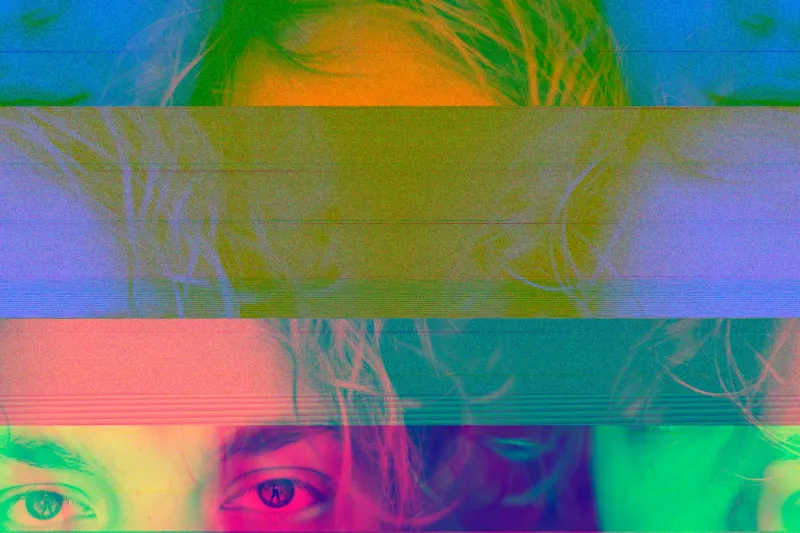
Glitch art never really went away, but it's evolved. The early wave — corrupted JPEGs, databent visuals, pixel cascades — was mostly aesthetic. Cool-looking chaos. The new generation of glitch artists is using those same broken-image aesthetics to say something.
Creators in communities like the Glitch Artists Collective (which lives mostly on Facebook and has over 50,000 members) are producing work that deliberately corrupts imagery of surveillance footage, corporate logos, and political photography. The visual language of error becomes a critique. Disruption as statement.
Artists like Rosa Menkman, who literally wrote a book called A Vernacular of File Formats, have been foundational here. But younger creators are picking up the thread and making it angrier, more urgent, more now.
Why it matters: When something feels both technically weird and emotionally charged, it tends to travel. Watch for glitch-influenced visual branding — especially in music and fashion — in the next 12-18 months.
2. Brutalist Web Design — the Internet Getting Ugly on Purpose
You know that feeling when every website looks exactly the same? Clean sans-serif fonts, hero images, rounded corners, pastel CTAs? Some designers decided the only answer was to go the complete opposite direction.
Brutalist web design — inspired by the architectural movement that celebrated raw concrete and exposed structure — throws out conventional UX wisdom and replaces it with asymmetry, clashing colors, aggressive typography, and layouts that feel almost confrontational. Sites built in this style look like they were designed by someone who read every best practice guide and then deliberately ignored all of it.
The community around Brutalist Websites (brutalistwebsites.com) has been cataloging examples for years, but the movement is gaining real traction among independent designers and artists who are tired of algorithmic aesthetics. Designers like Pascal Deville have championed the approach, and you'll see traces of it creeping into editorial design and music artist websites.
Why it matters: When the mainstream gets too polished, the reaction is always rawness. Brutalist web design is that reaction, and it's getting louder.
3. AI Music Producers Building Entirely New Sonic Identities
Forget the AI music discourse about whether Spotify-generated playlists are stealing streams. The genuinely interesting stuff is happening in underground producer communities where artists are using tools like Udio, Suno, and custom-trained models not to replace their creativity — but to build sounds that didn't exist before.
On platforms like SoundCloud and Bandcamp, and in Discord servers dedicated to experimental electronic music, a wave of producers are treating AI generation as an instrument. They're prompting, editing, layering, and warping AI-generated audio into compositions that sit somewhere between ambient, noise, and something that doesn't have a genre tag yet.
Creators like Holly Herndon have been exploring this territory with academic rigor, but the underground version is more chaotic and more prolific. These aren't musicians trying to game streaming algorithms. They're genuinely trying to hear something new.
Why it matters: New sonic aesthetics that emerge from underground producer communities almost always find their way into mainstream pop production. Someone's going to sample this energy into a hit record within the year.
4. Neocities and the Handcrafted Web Revival
Neocities — a hosting platform explicitly designed to evoke the spirit of GeoCities, the beloved/chaotic personal webpage platform that defined early internet culture — has become a genuine creative hub. And the work being made there is fascinating.
The Neocities community is full of people who are deliberately rejecting social media's design logic. Instead of profiles optimized for engagement, they're building personal websites with blinking text, tiled backgrounds, guestbooks, and hand-coded HTML layouts. It looks like 1998. It feels radical in 2025.
But beyond the nostalgia, there's a real design philosophy here: the idea that personal expression on the internet should be weird, specific, and not optimized for anyone else's algorithm. It's anti-platform energy expressed through hyperlinks and pixel art.
Why it matters: The handcrafted web aesthetic is already bleeding into indie brand design and editorial illustration. The desire for something that feels human-made and imperfect is a direct response to AI-generated smoothness — and it's resonating.
5. Datamoshing and the New Video Art Underground
Datamoshing is a video manipulation technique that exploits compression artifacts to create surreal, melting visual effects — frames bleeding into each other, colors smearing across motion, faces dissolving into abstract color fields. It sounds technical. It looks absolutely wild.
What started as a YouTube experiment has grown into a dedicated community of video artists who use datamoshing as a primary creative medium. You'll find them on Vimeo, scattered across Reddit threads, and increasingly on TikTok where the format's visual intensity translates surprisingly well to short-form.
Artists like Sven König have been working in this space for over a decade, but a younger generation is bringing new energy — combining datamoshing with found footage, archival material, and AI-generated video to create something that feels genuinely post-cinematic.
Why it matters: Music video directors and commercial directors have been borrowing from datamoshing for a while, but the underground is moving faster. Expect to see this aesthetic in mainstream visual content within the next year.
The Bigger Pattern Here
Look at these five movements together and a theme emerges: they're all, in different ways, pushing back against smoothness. Against optimization. Against content that's been algorithmically sanded down until it has no edges.
Glitch, brutalism, handcrafted HTML, datamoshed video — these are all forms of creative resistance that find beauty and meaning in imperfection, interruption, and intentional weirdness. And that instinct, historically, is where the most durable creative ideas come from.
At IIONNA, we think the best creative work lives on the edges. These communities are the edges. Keep an eye on them.