Paper First: How Going Offline Before Going Online Is Changing the Way Creatives Work
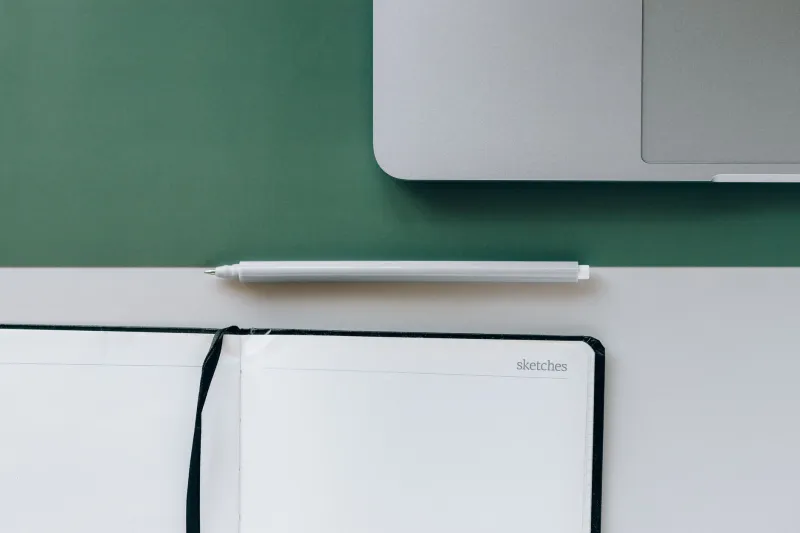
Somewhere between the fifth browser tab and the third notification, a lot of creative work quietly dies. Not dramatically — there's no single moment of collapse. It just... diffuses. The idea that felt alive in your head gets absorbed into the ambient hum of the open internet before it ever had a chance to become something real.
A growing number of designers, illustrators, writers, and makers have figured out a surprisingly low-tech solution to this very modern problem: they pick up a pen.
The Screen Is a Terrible Place to Start
Here's something that doesn't get said enough: the tools we use to finish creative work are often the worst possible tools for starting it. Digital software is built for execution. It's optimized, responsive, and packed with options — which is exactly what makes it so hostile to early-stage thinking.
When you open a design application, you're already inside a set of constraints: the grid, the color palette, the file format, the undo history that makes every mark feel reversible and therefore slightly less committed. The screen creates a certain kind of paralysis dressed up as possibility.
Paper doesn't do that. A blank page with a pen is one of the least optimized creative environments imaginable, and that turns out to be a feature, not a bug. There's no autocorrect, no suggested alternative, no version history. There's just what you put down and what it makes you think of next.
Creators who've made the shift to analog-first workflows describe the same thing in different ways: the ideas come faster, they feel more genuinely theirs, and the translation into digital tools later feels more purposeful — like they're executing a plan rather than figuring one out inside an application.
What the Shift Actually Looks Like in Practice
This isn't about going full Luddite. Nobody's throwing out their Wacom tablet or canceling their Creative Cloud subscription. The hybrid approach is more nuanced than that.
For visual artists, it often looks like this: thumbnails and composition sketches happen in a physical sketchbook — loose, fast, with no pressure to get it right. Once the core idea has shape and the artist knows what they're actually trying to say, then it moves to screen. The digital tools get used for what they're genuinely good at: precision, color accuracy, scalability, sharing.
For writers and content creators, the equivalent might be longhand drafting in a notebook before touching a keyboard. The physical act of writing by hand slows the process down in a way that turns out to be generative — you can't type as fast as you think, but you can write by hand at roughly the pace thoughts actually form, which means less gets lost in the gap.
Designers working on brand identity projects have started keeping what some call "concept notebooks" — physical journals where early visual language gets explored before it ever enters a presentation deck. Index cards, sticky notes, rough type studies done with markers. The mess that would look unprofessional on a screen becomes a legitimate part of the creative process when it lives in a notebook.
The Productivity Case (It's Stronger Than You'd Think)
Beyond the creative benefits, there's a practical argument for going analog first that holds up even under scrutiny.
Research on note-taking has long suggested that handwriting improves retention and conceptual processing compared to typing — you're forced to synthesize rather than transcribe. The same principle applies to creative ideation. When you can't copy-paste or drag-and-drop, you have to actually think about what you want before you commit it to the page. That friction produces better decisions earlier in the process.
There's also the focus question. A notebook doesn't have notifications. It doesn't update. It doesn't suggest related content or offer you a slightly different version of what you were just looking at. When you're working on paper, you're working on that thing, and nothing else. For deep creative work, that kind of single-channel attention is genuinely rare and genuinely valuable.
Creators who've adopted this approach consistently report spending less time in revision and rework on the back end, because the foundational decisions got made more carefully at the start. The analog phase isn't adding time to the process — it's front-loading the thinking that would otherwise happen inefficiently inside the digital tools.
The Cultural Moment Behind the Trend
It's worth asking why this is happening now, specifically. Analog tools have always existed. Sketchbooks never went away. But the deliberate, almost philosophical return to them as part of a digital creative practice feels like a response to something particular about this moment.
Screen fatigue is real and widely documented. But there's something more specific happening in creative communities — a sense that too much of the work is starting to look and feel the same, that the tools are quietly shaping the output in ways that aren't always visible until you step back. When everyone uses the same software with the same default settings, a certain homogeneity creeps in.
Going analog first is a way of injecting genuine individuality into the process before the tools get a chance to normalize it. The hand has a voice that the software doesn't — a particular weight, a characteristic inconsistency, an idiosyncratic way of connecting ideas spatially on a page. That voice can get preserved in the final digital work if the translation is handled thoughtfully.
Where This Goes From Here
The tools we're seeing emerge at the intersection of analog and digital suggest this isn't a passing mood. Scannable notebooks, apps that digitize handwritten sketches while preserving their character, drawing tablets that simulate paper texture — the industry is clearly watching this shift and trying to serve it.
But the most interesting part of this movement isn't the tools. It's the mindset. The creators leading this shift aren't rejecting digital culture — they're some of the most digitally fluent people working today. They're making a deliberate choice about when to use which kind of thinking, and they're getting better work out of the distinction.
For anyone feeling stuck in the loop of opening the same applications and producing the same kinds of work, the solution might be sitting in a drawer somewhere. Probably next to a pen that still has ink in it.