Print It Out: The Artists Keeping Paper Receipts of Their Digital Lives
Something You Can Actually Hold
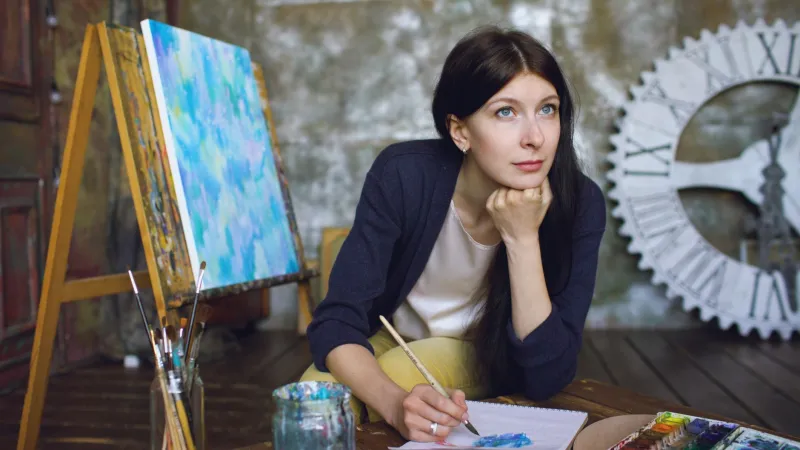
Nadia Chen keeps a binder. It's not fancy — a standard three-ring situation from Staples, the kind that costs four dollars. Inside it are printouts of every significant digital piece she's made over the past three years, annotated in ballpoint pen with dates, client names, what she was thinking, what she was listening to. Sometimes she tapes in a receipt from the coffee shop where she finished a project, or a printout of the email where a client said something that changed the direction of a piece.
Nadia is a freelance illustrator based in Chicago. She works entirely in Procreate and Photoshop. Her whole practice is digital. And yet.
"I needed proof," she says. "Not for anyone else. For me. Proof that I made things and they existed."
She's not alone in this impulse. Across the US, a loose but growing community of digital creators is developing physical archiving practices — printing, binding, rubber-stamping, hand-labeling — as a counterweight to the weightlessness of doing everything on a screen. It's not anti-technology. It's something more nuanced than that.
The Ephemerality Problem
The internet has a memory problem. Not in the sense that it forgets things — it doesn't, mostly — but in the sense that the things it remembers are stored in places you don't control. Your Instagram portfolio from 2018 could vanish tomorrow if Meta decides your account violates a policy you've never read. Your Behance case studies live on Adobe's servers, not yours. Even work stored in the cloud is contingent on a subscription, a company's continued existence, a password you might lose.
Creators who've been online long enough have watched this happen. Platforms fold. Accounts get suspended. Portfolios built on third-party infrastructure disappear with almost no warning. The work doesn't stop existing — usually — but the presentation of it, the context around it, the proof of when it was made and how it evolved: that stuff is fragile.
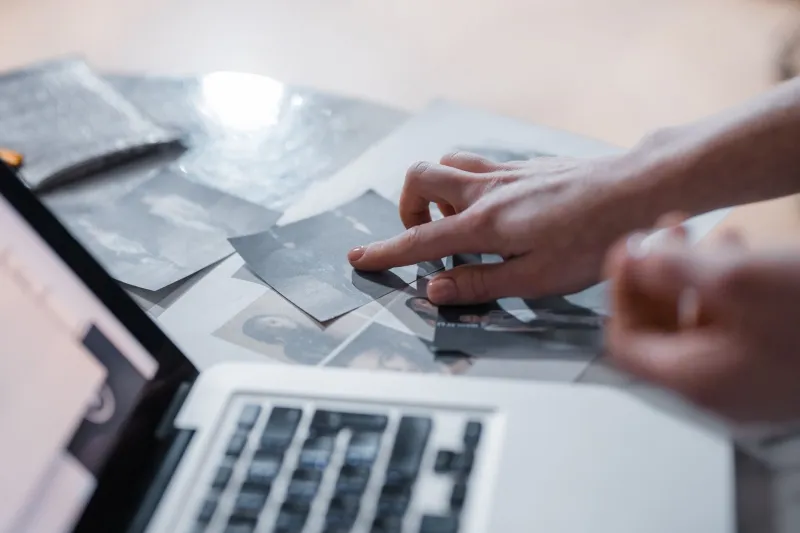
Physical documentation solves a specific version of this problem. A printed zine can't be deplatformed. A hand-bound archive doesn't require a login. A rubber stamp on a piece of card stock is timestamped in a way no metadata can replicate — you can feel how old it is.
What Physical Archiving Actually Looks Like
The practices vary wildly, which is part of what makes this community interesting to look at. There's no single methodology, no influencer selling a course on how to do it right. People are figuring it out based on their own needs and aesthetics.
Some creators, like Nadia, keep functional binders — purely practical, focused on documentation. Others go deeper into the craft. Marcus Webb, a motion designer in Brooklyn, has been producing a quarterly printed booklet of his work for the past two years. Each issue is a limited run of twenty copies, risograph-printed at a local shop in Bushwick. He keeps five for himself, gives the rest to friends, collaborators, and the occasional stranger who asks nicely. The booklets aren't for sale. They're not part of his marketing strategy. They're just a record.
"There's something about the risograph ink," he says. "It's slightly imprecise. Two copies are never exactly the same. Which feels right for work that's trying to capture a specific moment."
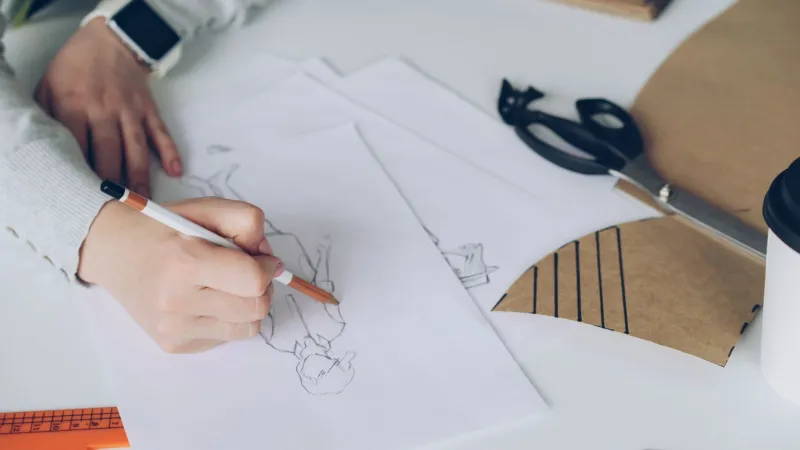
Other creators are using physical objects as annotation tools — printing out screenshots of their social media analytics and writing responses to them by hand, creating a kind of dialogue between data and intuition. Some are making rubber stamp kits to mark printed work with edition numbers, dates, and their own logo, treating even casual printouts with the formality of an edition.
The Emotional Weight of the Physical
There's a psychological dimension here that's hard to articulate but easy to recognize. Holding something you made — actually holding it, feeling its weight, seeing how light falls across the surface — does something to your relationship with the work that a screen can't replicate.
Art educators have known this for decades. There's research on how handwriting engages memory differently than typing, how tactile engagement deepens learning and retention. The same logic applies to creative practice. When you print your work, you see it differently. Flaws you'd scrolled past a hundred times become visible. Compositions that felt right on screen feel off in your hands, or vice versa.
Creators who've adopted physical archiving practices consistently report a shift in how they evaluate their own output. The printing becomes a kind of editorial act — a decision point. Not everything makes it into the binder or the booklet. Choosing what to print forces a level of curation that the endless scroll of a digital folder doesn't.
Permanence as a Creative Value
What's interesting about this movement — if you can call something this loosely organized a movement — is what it implies about how creators are thinking about their own legacy.
For a long time, the dominant assumption in digital creative culture was that permanence was the internet's job. You posted, it stayed up, that was the archive. But as platforms have proven themselves unreliable stewards of creative work, some creators are deciding that permanence is actually their responsibility. That if they want their work to last, they have to make it last — physically, materially, in a form that doesn't depend on a server farm in Oregon staying online.
There's something quietly radical about that. In a culture that's optimized almost everything for ephemerality — stories that disappear, trends that cycle in weeks, platforms that pivot without warning — choosing paper is a small act of insistence. It says: this was real, I made it, and I'm not leaving it up to the cloud to remember.
Nadia's binder is almost full. She's already bought the next one.