Rough Drafts Are the New Masterpiece: Why Creators Are Going Public With Their Process
There's a particular kind of anxiety that lives inside the gap between an idea and a finished thing. Every creator knows it — that stretch of time where the work is too raw to show anyone, too personal to post, too imperfect to exist outside your own hard drive. For a long time, the internet reinforced that feeling. Feeds were polished. Portfolios were pristine. Anything less than done felt like a liability.
But something has quietly flipped. Scroll through the feeds of some of the most engaged digital creators right now and you'll find rough sketches sitting next to finished pieces, color studies with no context, half-rendered 3D models, and voice memo recordings of half-formed song ideas. The beta version is having a moment — and it's not a glitch in the system. It's a deliberate creative choice.
The Pressure to Finish Was Never Really About Quality
Let's be honest about where the obsession with polish came from. It wasn't purely artistic. A lot of it was algorithmic — platforms rewarded content that looked finished because finished content performed better in the early days of visual social media. Instagram trained a generation of creators to think in terms of grids, aesthetics, and cohesive visual identities. The message was clear: only show the thing when it's ready.
The problem is that "ready" is a moving target. And for a lot of creators, the pursuit of readiness became a reason to never post anything at all. Perfectionism dressed itself up as professionalism, and whole creative practices quietly stalled out behind the scenes.
What's happening now is partly a reaction to that. Creators who spent years curating flawless outputs started noticing something uncomfortable — the more polished the work, the less people seemed to actually connect with it. Engagement was there, sure. But conversation? Community? That was harder to come by when every post felt like a product launch.
The Sketch Gets More Comments Than the Final
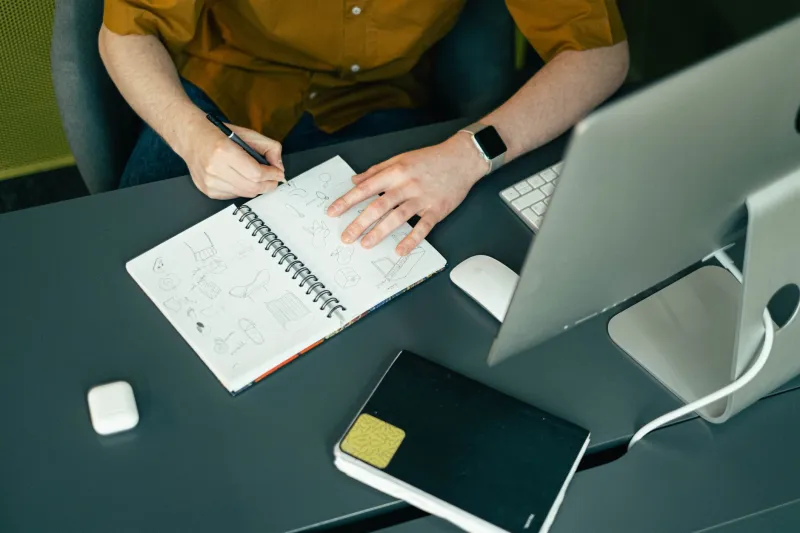
Ask any illustrator, animator, or graphic designer who's started sharing process work and they'll tell you the same thing: the rough version always hits different. A quick pencil sketch posted with a casual caption generates more genuine responses than the finished, colored, fully-rendered version that took three times as long.
There's a psychological reason for that. When something looks unfinished, it creates an opening. Viewers feel like they're being invited in rather than presented to. They can see the thinking, not just the outcome. And when people can see the thinking, they want to participate in it — they leave suggestions, share their own experiences, ask questions. The work becomes a conversation starter instead of a conversation ender.
This is especially true in design communities, where sharing early-stage work has evolved into a legitimate collaborative tool. Designers on platforms like Dribbble and Behance have long used "WIP" posts to gather feedback before committing to a direction. But what used to be a practical workflow hack has transformed into something more intentional — an aesthetic and a philosophy.
Beta Culture Borrows From Tech, and It Works
The language of "shipping a beta" comes straight from software development. In tech, releasing an early version of a product to real users is a feature, not a flaw. You gather data, you iterate, you improve. The beta isn't a lesser version of the thing — it's a necessary stage in making the thing better.
Creators have started applying that same logic to art. A musician drops an unmastered demo to see how it lands. A visual artist posts a color study before committing to a full piece. A filmmaker shares a rough cut with their audience and literally asks: does this scene work? The community becomes part of the development process, and the final version — if there even is one — is shaped by that input.
This isn't crowdsourcing creativity in a watered-down, design-by-committee way. It's more like having a studio full of thoughtful collaborators who are invested in the outcome. And for independent creators working largely in isolation, that kind of feedback loop can be genuinely transformative.
The Aesthetic Itself Has Become the Statement
Here's where it gets interesting from a purely visual standpoint: unfinished work has developed its own aesthetic language, and it's a compelling one. The visible pencil line beneath the digital ink. The color blocking that hasn't been refined. The type that's clearly a placeholder. These elements used to signal incompleteness. Now they signal process, transparency, and a certain kind of creative confidence.
There's something almost punk about it — a rejection of the idea that art has to be packaged before it can be meaningful. Showing the mess is a statement that the mess is part of the work. That creativity isn't a linear path from idea to finished object, but a sprawling, nonlinear, often chaotic process that's worth documenting in real time.
Some creators have leaned so far into this that the process documentation has become its own body of work, entirely separate from whatever the "finished" thing turns out to be. The journey is the content. The iteration is the art.
What This Means for How We Think About Creative Output
Shifting toward a beta-friendly creative culture has some real implications for how creators think about their practice. For one thing, it lowers the stakes of any single piece. When you're regularly sharing work in progress, a post that doesn't land isn't a failure — it's just a data point. That shift in framing alone can unlock a lot of creative paralysis.
It also changes the relationship between creator and audience in a fundamental way. Instead of presenting finished work to passive consumers, you're building something alongside people who care about it. That's a different kind of community — more engaged, more loyal, more likely to stick around when the work evolves in unexpected directions.
And from a purely practical standpoint, posting process work keeps the momentum going. Creative droughts are real, and the pressure to only post when something is done can mean weeks of silence that erode audience connection. A quick sketch, a voice note, a screenshot of a half-finished design — these keep the channel open without requiring a full production cycle.
The Unfinished Thing Might Be the Most Honest Thing You Make
There's a version of creative maturity that looks like knowing exactly when to stop — when the work is done, when it's ready, when it can go out into the world. That's a real skill and it matters. But there's another kind of maturity that looks like being comfortable enough with your own process to let people see it before it's resolved.
The creators who are thriving right now aren't necessarily the ones with the most polished feeds. They're the ones who've figured out how to make their audience feel like insiders — like they're watching something get made, not just consuming something that arrived fully formed.
The rough draft isn't a lesser version of the art. Sometimes it's the most alive version of it.