Torn Edges and Tape Marks: How Collage Energy Took Over Digital Design
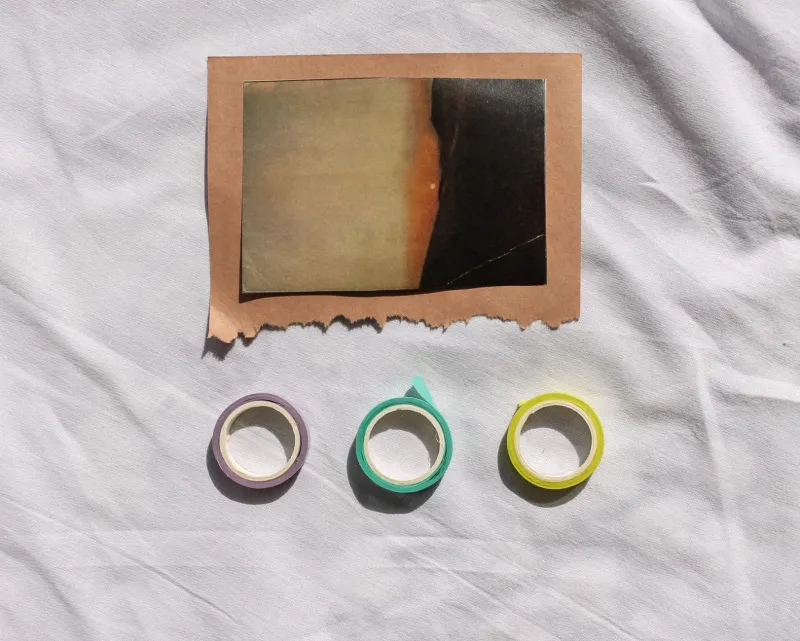
Open almost any indie brand's Instagram right now and you'll spot it immediately. A product photo layered over a scanned piece of newsprint. Type that looks like it was cut out with scissors and glued down slightly crooked. Color blocks that don't quite line up. It looks like something your most creative friend made at 2 a.m. on a Sunday — and that's entirely the point.
Collage as a visual mode has been around since the early 20th century, but in 2024, it's not just surviving — it's absolutely everywhere. From fashion editorial to app UI to independent music artwork, the cut-and-paste aesthetic has migrated from the physical world into digital spaces with a kind of confidence that feels less like a trend and more like a correction.
The Backlash Nobody Named Out Loud
For a while, digital design was sprinting toward a particular kind of perfection. Gradients so smooth they looked like they were rendered by a machine (because increasingly, they were). Layouts with the kind of mathematical precision that made everything feel interchangeable. Then came the AI-generated imagery boom, and suddenly the internet was flooded with visuals that were technically flawless and somehow completely hollow.
Designers started noticing the fatigue before they could articulate it. There was this growing feeling that something tactile had been lost — that the fingerprint, literally and figuratively, had been erased from digital work. Collage aesthetics stepped into that gap without asking permission.
The appeal isn't just nostalgia, though there's definitely some of that in the mix. It's more about what imperfection communicates. A torn edge says someone made a choice. A piece of tape holding two images together says the creator was present, handling materials, making something with their hands before they ever touched a trackpad.
Physical Meets Pixel
What's interesting about this particular wave of collage-influenced design is that a lot of the most compelling work isn't purely digital. Creators are doing the physical thing first — actually cutting up magazines, printing photos and ripping them, layering translucent papers over hand-drawn marks — and then scanning or photographing that work to bring it into a digital environment.
Artists like Brooklyn-based designer Maya Olusegun have built entire visual identities around this hybrid process. She scans raw collage materials — torn book pages, dried flowers, fabric swatches — and uses them as base layers in her digital compositions, preserving the grain and shadow that a purely digital recreation would flatten out. The result has a warmth that's genuinely hard to fake, even with the best texture packs.
This blended approach has become especially prominent in independent fashion. Smaller labels that can't compete with the production budgets of major houses have leaned into collage-forward lookbooks and campaign visuals as a way to stand out. The lo-fi quality signals authenticity in a market where consumers are increasingly suspicious of overproduced imagery.
Why It Hits Different in UI
The collage influence has also made its way into interface design, which is maybe the most surprising corner to find it in. UI has traditionally prioritized clarity and frictionless navigation — not exactly the home turf of torn paper and overlapping type. But a growing number of independent creators building their own portfolio sites, Substack pages, and digital storefronts are deliberately introducing collage-style elements to make their spaces feel distinct.
Scrapbook-style layouts with handwritten annotations. Navigation menus that look like sticky notes. Photo grids where the images overlap instead of sitting in tidy rows. These choices slow the user down slightly, which sounds like a design failure but actually functions as an invitation — it signals that this is a space worth spending time in, not just scrolling through.
The key is restraint. The designers doing this well understand that collage energy is a seasoning, not the whole dish. One rough-edged element in an otherwise clean layout creates tension in a way that feels intentional. A whole page of overlapping chaos just reads as noise.
The DIY Signal
There's also something politically interesting about what collage aesthetics communicate right now. The format has a long history of being used for protest and counter-culture expression — zines, punk flyers, activist posters. Choosing a collage visual language in 2024 carries some of that DNA, even when it's being used to sell candles or promote a podcast.
It's a way of saying: this wasn't made by a committee. This wasn't optimized by an algorithm. A human made this, and you can see the seams.
For younger designers especially, that signal matters. Gen Z creators who grew up watching the internet get increasingly homogenized are gravitating toward anything that feels handmade and specific. Collage gives them a visual vocabulary that resists easy replication — because even if someone copies the technique, they can't copy the exact magazine clipping you chose or the way your particular scanner renders shadow.
Making It Your Own
If you're a creator thinking about incorporating collage aesthetics into your own work, the most important thing is to actually touch something physical first. Don't start with a Photoshop texture pack. Go buy a couple of old magazines from a thrift store. Print some of your own photos and tear them. See what happens when you layer things in the real world before you digitize anything.
The grain and shadow and slight misalignment that come from working with actual materials are almost impossible to convincingly fake from scratch. That's not a limitation — it's the whole point. The imperfection is the information.
Collage aesthetics are having this moment because they're doing something that a lot of current digital design has stopped doing: they're showing the work. And right now, that visibility — the sense that a real person made a real choice and left a real mark — might be the most valuable thing a piece of design can communicate.