Small Rooms, Real People: Why Creators Are Ditching the Feed for Intimate Digital Spaces
There's a particular kind of loneliness that lives inside a dashboard. You post something you made — something that cost you real time and real feeling — and the algorithm decides whether anyone sees it. Maybe it gets traction. Maybe it evaporates. Either way, the relationship between you and whoever's watching feels thin. Transactional. Like shouting into a very crowded, very loud room and occasionally getting a thumbs up back.
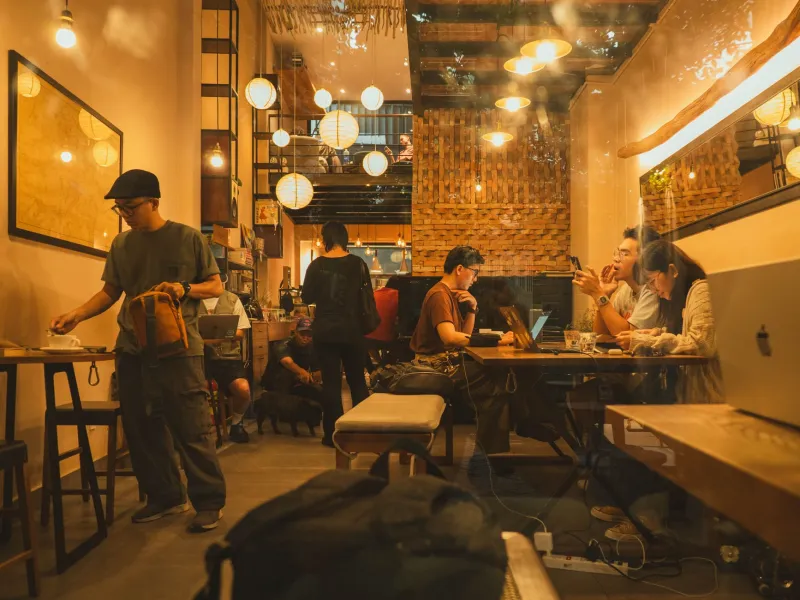
A growing number of digital artists and creators are done with that room. Not because they've given up on connecting — actually, the opposite. They're building smaller rooms instead. Quieter ones. And what's happening inside those spaces is starting to look a lot like what community used to mean before the feed turned everything into a performance.
The Feed Was Never Really About You
Let's be honest about what mainstream social platforms were designed to do. They weren't built to help artists find their people. They were built to keep eyeballs on ads for as long as possible. The creator economy — as exciting as parts of it genuinely are — got layered on top of an infrastructure that was never optimized for depth.
The result is a weird paradox: creators with hundreds of thousands of followers who feel completely disconnected from their audience. Viral moments that don't translate into anything lasting. Comments sections that feel more like a mosh pit than a conversation.
That gap between reach and real connection is exactly what's driving people toward smaller, more intentional platforms. Not as a rejection of the internet, but as a correction to it.
Discord Became the Living Room Nobody Expected
If you'd told someone in 2015 that Discord — a platform built for gamers to coordinate raids — would become one of the most important gathering places for digital artists, illustrators, and experimental creatives, they probably would've laughed. And yet here we are.
The appeal isn't complicated. Discord servers can be locked, invite-only, and organized into channels that actually mirror how creative people think and work. There's a channel for work-in-progress stuff. One for references and inspo. One where people just vent about burnout or ask dumb questions without judgment. The structure gives communities shape without making them feel corporate.
Creators who run their own servers consistently describe the same thing: the conversations that happen there feel different. More honest. People share unfinished work they'd never post publicly. They ask for feedback without performing confidence they don't have. They show up as themselves rather than as their brand.
For digital artists especially — people whose work often gets consumed in a three-second scroll — having a space where someone can actually sit with your work, ask about your process, or tell you why something hit them is genuinely rare. And it turns out, genuinely rare things are worth protecting.
The Newsletter as Intimacy Engine
Something interesting happened when creators started moving their writing to newsletters. The format — direct to inbox, no algorithm, no engagement metrics baked into the reading experience — stripped away a lot of the performance anxiety that comes with posting publicly.
A newsletter lands differently than a post. It shows up in a place the reader chose to give you access to. That's not nothing. There's an implied agreement there: I want to hear from you. For creators who've spent years fighting for attention, that kind of willing, opted-in audience feels almost radical.
The newsletters that are building the most devoted communities aren't the ones that look like polished editorial products. They're the ones that read like a letter from a specific person — with their particular obsessions, half-formed ideas, and genuine uncertainty intact. Designers walking through why a project failed. Illustrators sharing the reference images that are currently living rent-free in their heads. Digital artists explaining what they're trying to figure out, not just what they've already figured out.
Platforms like Substack and Buttondown have made this accessible to basically anyone, but the real shift is cultural. Creators are realizing that being legible as a human being — confused, curious, still-in-progress — is actually a more powerful connection tool than being impressive.
Micro-Collectives and the Return of the Crew
Beyond individual newsletters and servers, there's another pattern emerging: small groups of creators banding together under shared identities or creative umbrellas. Call them micro-collectives, creative pods, or just friend groups with a shared Notion doc — the structure varies, but the impulse is the same.
These collectives function as accountability structures, creative sounding boards, and low-key promotional networks all at once. When five illustrators or three experimental video artists pool their audiences and cross-promote each other's work, they're doing something the algorithm doesn't particularly reward: building trust through association.
There's also something about the collective model that takes pressure off the individual. You don't have to be a full-time content creator to be part of something that feels like a real creative scene. You just have to show up for the people in your corner, and let them show up for you.
In a lot of ways, it's not that different from how creative communities have always worked — artists in the same city going to each other's shows, sharing studio space, putting each other's zines in their bags. The internet just made it possible to have that dynamic with people you've never met in person, scattered across a dozen different time zones.
What "Community" Actually Costs
None of this is frictionless. Building and maintaining a small, intimate online space takes real energy — probably more, in some ways, than posting into the void. You have to show up consistently. You have to actually respond to people. You have to make decisions about who gets in and what the culture of the space is going to be.
Creators who've built thriving Discord communities or loyal newsletter audiences are pretty upfront about this: it's slow work. You're not going to hit 10K subscribers in a month by sending thoughtful emails to 200 people who actually care. The metrics don't pop. The growth curve looks boring.
But the thing that keeps people doing it is the quality of what they get back. Real feedback. Real relationships. A sense that their work is landing somewhere instead of just floating. And maybe most importantly — a feeling of not being alone in what they're doing.
That last part might be the whole point. The loneliness of the algorithm isn't just about the work not being seen. It's about doing creative work in a context that makes it feel like a performance rather than a conversation. Small spaces, it turns out, are pretty good at fixing that.
The Quiet Shift Already Happening
This isn't a trend that's going to announce itself with a viral moment. It's already underway, and it looks like a lot of small, unglamorous decisions: a creator closing their DMs and opening a server instead, an artist launching a newsletter with no monetization plan and just seeing who shows up, a handful of digital designers deciding to do a monthly virtual studio visit just for each other.
None of it scales the way the platforms want things to scale. But scale was never really the goal. Connection was. And right now, the places where that's actually happening are the small rooms — the ones you have to be invited into, the ones that don't show up in anyone's feed.